Part · ice makers · washers · dishwashers
Water inlet valves in St. Louis Park: hard water’s first target
No ice, a dishwasher that hums but stays dry, or a washer that fills at a trickle? In St. Louis Park, hard well water makes the inlet valve a frequent suspect, and we meter it before naming it.
- $99 diagnostic, counted inside the repair price once you approve it
- One written price before a part comes off the truck
- Same-day windows held for warm refrigerators and freezers
- Meter checkCoil resistance and voltage at the valve
- Written priceOne number in writing before any work
- Warm fridgeSame-day priority when cooling is the problem
- Hard waterSoftener settings asked about on every call
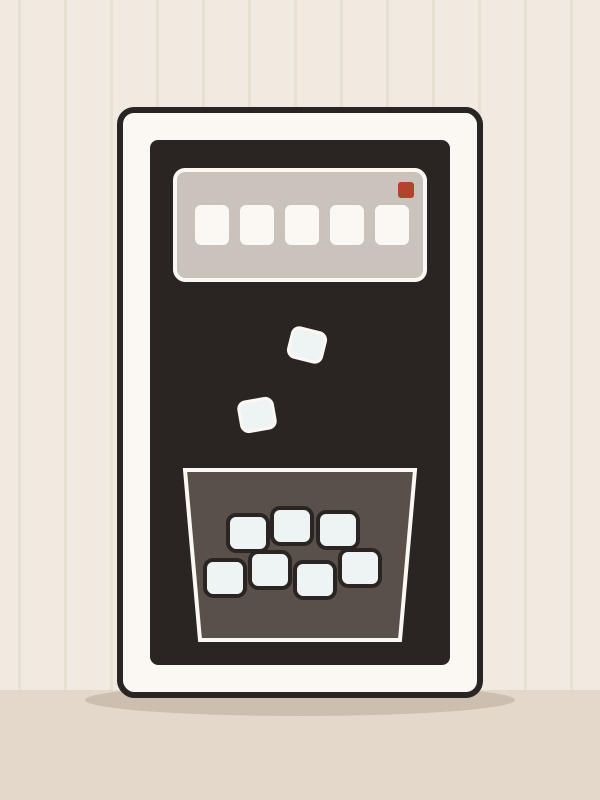
Water inlet valve
What a water inlet valve does
A water inlet valve is an electric gate between your home’s supply line and the machine. Inside a plastic or brass body, a solenoid coil lifts a plunger when the control sends it power, and water flows past a small rubber diaphragm until the power stops. A fine mesh screen at the inlet catches grit before it reaches the diaphragm. Washers usually carry a dual valve, one side for hot and one for cold, sometimes with an extra outlet for the dispenser. A dishwasher valve delivers a single fill that the timer sets and a float switch guards. On a refrigerator, the valve on the back feeds the ice maker and, on many models, the door dispenser too, often through a filter. Every one of these valves is built to snap closed the instant power drops.
Inlet valves rarely fail from age alone; the usual cause is what the water carries. Hard groundwater leaves scale in the narrow passages and on the diaphragm seat, and sand or rust flakes from an old supply line pack the inlet screen until only a trickle gets through. A diaphragm that cannot seat cleanly lets water seep after the cycle ends, which overfills an ice mold, drips into a washer tub overnight or leaves standing water in a dishwasher. Coils also open electrically, especially after years of heat in a dishwasher base. Low household pressure, a half-closed saddle valve on a refrigerator line or a kinked hose behind a washer all mimic a weak valve, so the supply side gets checked before the part is judged.
Signs
Signs an inlet valve is failing
- The ice maker stops making cubes, or makes small, hollow cubes that break apart in the bin.
- A dishwasher hums at the start of a cycle, but the tub stays dry.
- The washer fills so slowly that the cycle stalls or the display shows a fill error.
- Water keeps trickling into the washer tub or dishwasher after the machine is switched off.
- Ice fuses into a single lump in the bin because a seeping valve keeps topping up the mold.
- A buzz or hum comes from the back of the refrigerator each time the ice maker calls for water.
Where we find it
Where we replace inlet valves
| Machine or model type | What we see with this part there |
|---|---|
| Refrigerator ice makers | Valve on the back feeds the mold; scale and slow fills make small cubes. |
| Refrigerators with door dispensers | One valve often feeds dispenser and ice maker; either outlet can fail alone. |
| Top-load and front-load washers | Dual hot and cold valves; clogged screens cause fill errors and long cycles. |
| Built-in kitchen dishwashers | Single valve behind the toe kick; a seeping diaphragm leaves water in the tub. |
How we test it
How we test an inlet valve
- 1
Check the supply first
The technician confirms the house shutoff is fully open, the hose or line is not kinked, and the pressure at the connection is adequate. Many slow fills trace back to a saddle valve that was never opened all the way, or to an overdue refrigerator filter, so those come before any verdict on the valve.
- 2
Inspect the inlet screen
With the water off and the line disconnected, the screen at the valve inlet is examined for scale, sand or rust. Debris here says something about the supply itself, which matters on hard well water and in homes with aging galvanized pipes.
- 3
Meter the solenoid coil
With power removed, the meter reads resistance across each coil, and an open coil or a reading far outside the expected range condemns the valve. The technician then measures voltage at the valve during a fill command to confirm the control is actually sending power.
- 4
Run a timed fill
After repair, the machine runs a fill while the technician watches the flow and checks every fitting for drips. On an ice maker the mold level is confirmed; on a washer both the hot and cold sides are tested, along with the dispenser outlet.
Minnesota angle
Inlet valves and St. Louis Park’s hard well water
St. Louis Park draws its water from about nine deep municipal wells, and that hard groundwater is the main reason inlet valve replacement in St. Louis Park comes up so often on our calls. Scale builds fastest in houses where the brine tank sits empty or no softener was ever installed, so the technician asks about it on every visit near Wooddale Avenue, Cedarhurst or Westwood Hills. Winter adds a second risk: a refrigerator line run along an outside wall or through a cold crawlspace can freeze and crack a valve body. Homes on soft Minneapolis water see fewer scaled valves, though sediment from old pipes clogs screens there just the same.
Questions
Water inlet valve questions
Does a softener protect the inlet valve?
It helps a great deal on hard well water. A softener that is set correctly and kept in salt slows scale on valve seats and screens in every machine in the house. It does nothing for sand or rust from an old supply line, so a valve can still clog in a softened home, and we check both on the visit.
Can I clean the inlet screen instead of replacing the valve?
Sometimes, if the screen is the only problem and the coil and diaphragm test good. Many screens are pressed into the valve and tear when pulled, though, and scale often sits deeper than the screen. A safe owner check is making sure the shutoff is fully open and the hose has no kinks; leave the disassembly to the technician.
Why does my St. Louis Park condo dishwasher leave water in the bottom?
A little water in the sump is normal on many dishwashers. Standing water above the filter after a finished cycle points to a drain problem, while water that slowly appears between cycles suggests a seeping inlet valve. In West End condos and rentals, nothing starts until the unit’s owner or manager has seen the quote by text and said yes.
Will a new valve fix ice cubes that taste bad?
Taste usually comes from an old water filter, a stale bin or the household water itself, not the valve. The valve affects how much water reaches the mold and how fast it arrives. We look at the filter date and the cube size during the visit and tell you which issue you actually have.
Is a leaking washer valve urgent?
Treat it as urgent. A valve that will not close can overfill the tub and flood the laundry area, and in a main-floor laundry that water ends up in the ceiling below. Closing both supply valves behind the washer is a safe owner step, and then request the next opening we have.
Book the $99 diagnostic
On a St. Louis Park inlet valve call, the $99 diagnostic is tucked into the written figure you accept, and if the old valve stays put, $99 settles everything.